How Much Does It Cost to Clear an Acre of Land in Florida?
Clearing one acre of land in Florida generally costs between $3,000 and $35,000.
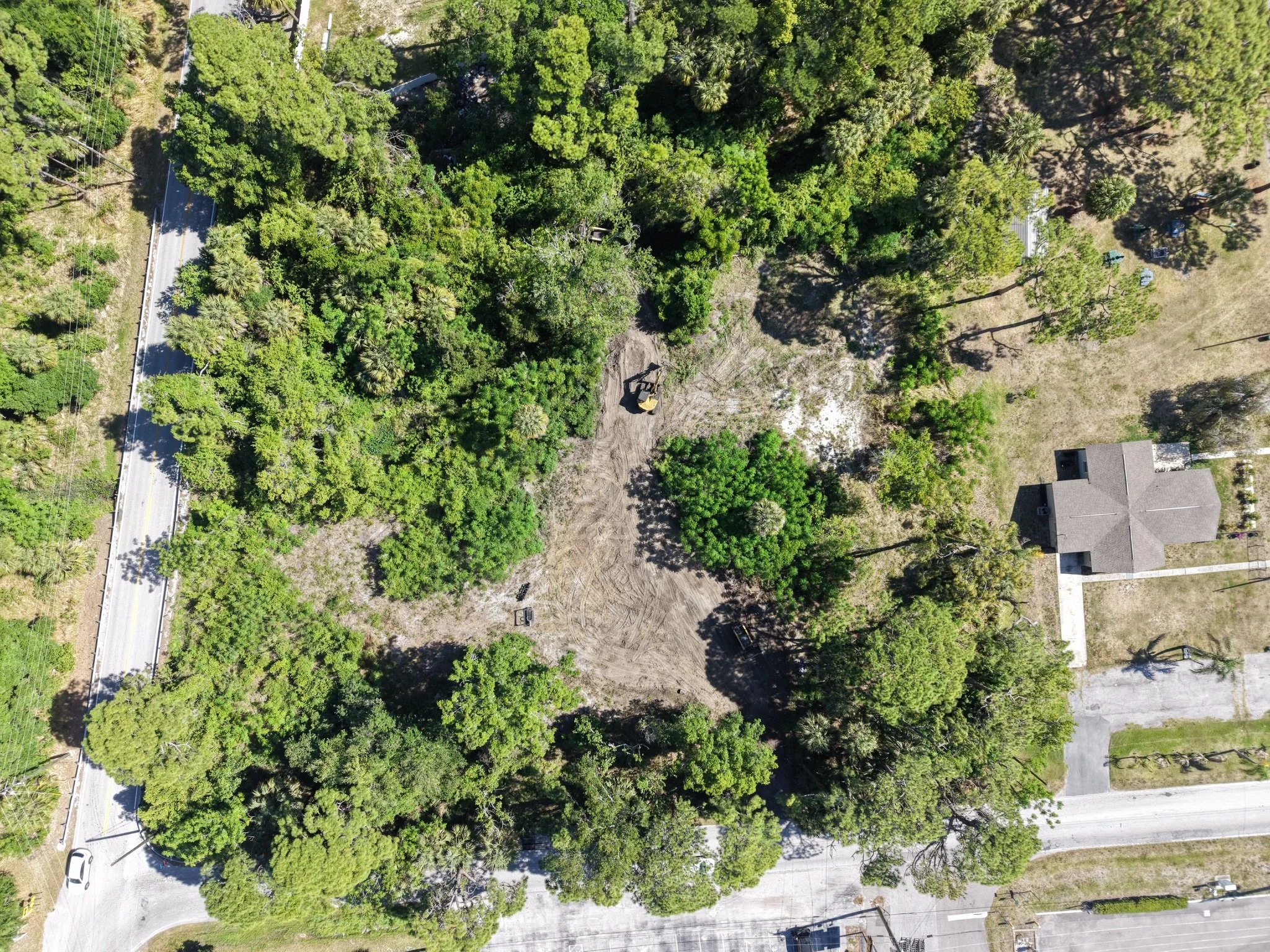
An acre covered in brush and small trees may fall near the lower end of that range. A heavily wooded acre requiring large-tree removal, stump excavation, debris hauling, root raking and grading can reach the upper end.
There is no reliable flat price per acre because two properties of the same size can require completely different amounts of work.
Florida Land-Clearing Costs at a Glance
| Estimated Range | Typical Property | Possible Scope |
|---|---|---|
| $3,000–$8,000 | Light brush, palmettos and smaller trees | Mulching or basic clearing with limited finish work |
| $8,000–$18,000 | Mixed brush, medium trees and scattered larger trees | Tree removal, some stump work, debris management and rough grading |
| $18,000–$35,000 | Dense vegetation and mature trees | Full clearing, stump excavation, hauling, root raking and grading |
What Affects the Cost of Clearing an Acre?
The primary cost factors include:
Number and size of the trees
Density of the underbrush
Stump and root removal
Burning versus hauling debris
Equipment and truck access
Root raking and grading
Wet ground or environmental restrictions
How the property will be used afterward
Number and Size of the Trees
Tree density is one of the biggest factors affecting land-clearing cost.
Brush, palmettos and small trees can usually be processed faster than mature pines and oaks. Large trees require heavier equipment, more operating time and additional handling after they are on the ground.
Selective clearing can also take longer because operators must work carefully around trees, buildings, fences and other features that need to remain.
Forestry Mulching Versus Full Land Clearing
Not every property needs to be completely cleared and graded.
Forestry mulching processes brush and smaller vegetation into mulch that stays on the property. This can be an efficient option when the goal is to open access, control overgrowth or make a property walkable.
Full land clearing may include removing trees, excavating stumps, clearing roots, managing debris and grading the disturbed ground. This is more appropriate when the property is being prepared for a house, building pad, driveway, pasture or other construction.
Making a property walkable is different from making it ready to build on. The more finished the property needs to be, the more work and equipment time the project will require.
Burning Versus Hauling Debris
What happens to the cleared material can significantly change the price.
Burning On-Site
Burning can reduce the number of truckloads that must leave the property, but it is not possible on every site.
Land-clearing and large pile burns require authorization from the Florida Forest Service. Weather, setbacks, local restrictions and available fire-suppression equipment must also be considered.
Burning may not be safe or practical when the clearing area is close to:
Houses
Power lines
Roads
Neighboring properties
Dry vegetation
Areas without enough room for a safe burn pile
Hauling Debris Away
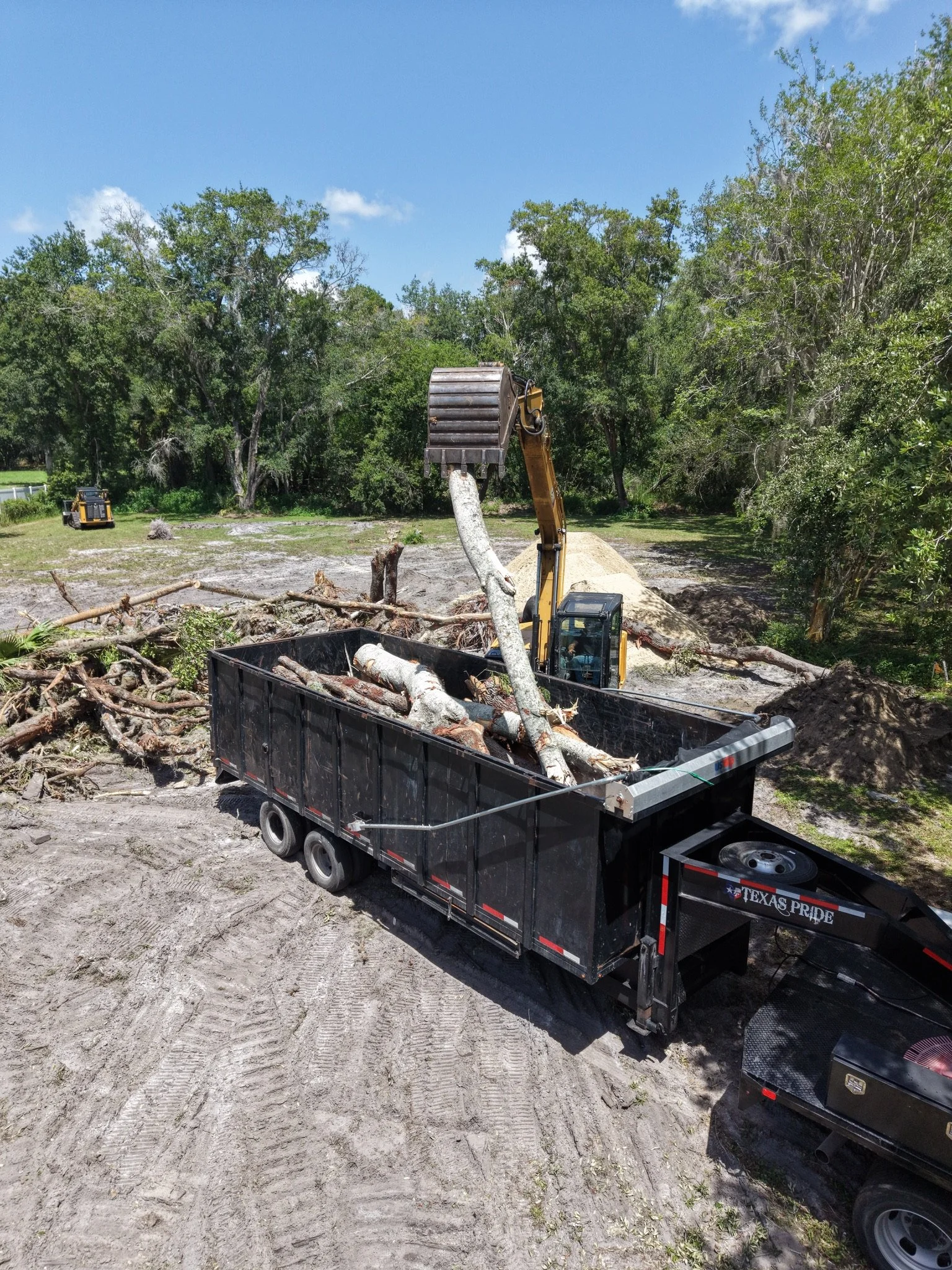
If burning is not permitted or practical, the trees, stumps and vegetation may need to be loaded and hauled to an approved disposal location.
Hauling adds trucks, drivers, loading time, disposal fees and fuel. A heavily wooded acre can produce a considerable number of loads, especially when mature trees and large stumps are removed.
Does the Property Need Root Raking?
Removing trees does not automatically leave the ground ready for construction.
Root raking removes remaining roots, buried wood and other organic material from the soil. This may be necessary when the cleared area will become:
A homesite or building pad
A driveway or access road
A pasture
A finished yard
A commercial work area
Removing buried organic material helps reduce future settling, soft areas and depressions.
A property being opened for access may not need extensive root raking. A property being prepared for construction usually requires a more complete finished surface.
Is Grading Included?
Land clearing and grading are separate services, although they are often completed during the same project.
Clearing removes vegetation. Grading reshapes and smooths the ground afterward.
Grading may be needed to:
Smooth ruts and disturbed areas
Establish proper drainage
Prepare a house or building area
Create driveway access
Fill low areas
Prepare for sod, seed or pasture
Every estimate should state whether rough grading, finish grading or no grading is included.
Equipment and Truck Access
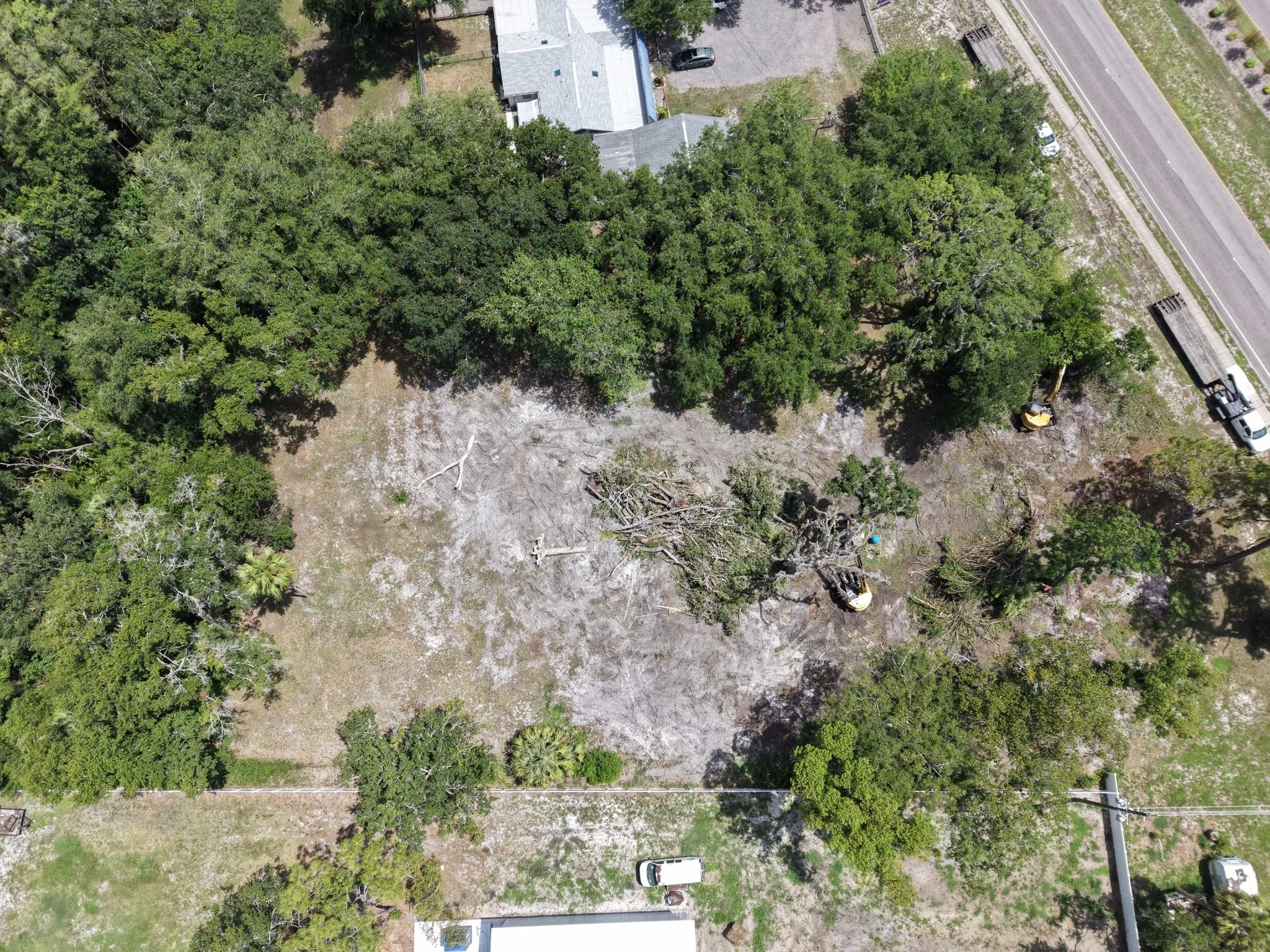
Heavy equipment, trucks and trailers must be able to reach the work area safely.
The following conditions can make clearing more difficult:
Narrow gates or entrances
Soft or wet ground
Overhead power lines
Nearby houses and structures
Limited space for turning trucks
Fences or trees that must remain
Long distances between the clearing area and the road
An open property with good equipment access will normally be more efficient to clear than a confined residential lot.
Florida Permitting and Environmental Conditions
Before clearing begins, the property should be reviewed for wetlands, conservation areas, easements, protected trees and local land-alteration requirements.
Clearing, grading or placing fill in wetlands may require authorization from the Florida Department of Environmental Protection or the applicable water management district.
County and municipal requirements can also apply to tree removal, land clearing and debris burning. These requirements should be identified before equipment arrives.
What Should a Land-Clearing Quote Include?
When comparing estimates, make sure each contractor is pricing the same finished result.
Ask whether the quote includes:
Brush and tree removal
Stump excavation
Forestry mulching
Root raking
Burning or debris hauling
Disposal costs
Rough or finish grading
Equipment mobilization
Erosion-control measures
Permit assistance
A lower estimate may only include knocking down vegetation. Another estimate may include removing the debris and preparing the property for construction.