What is rip rap?
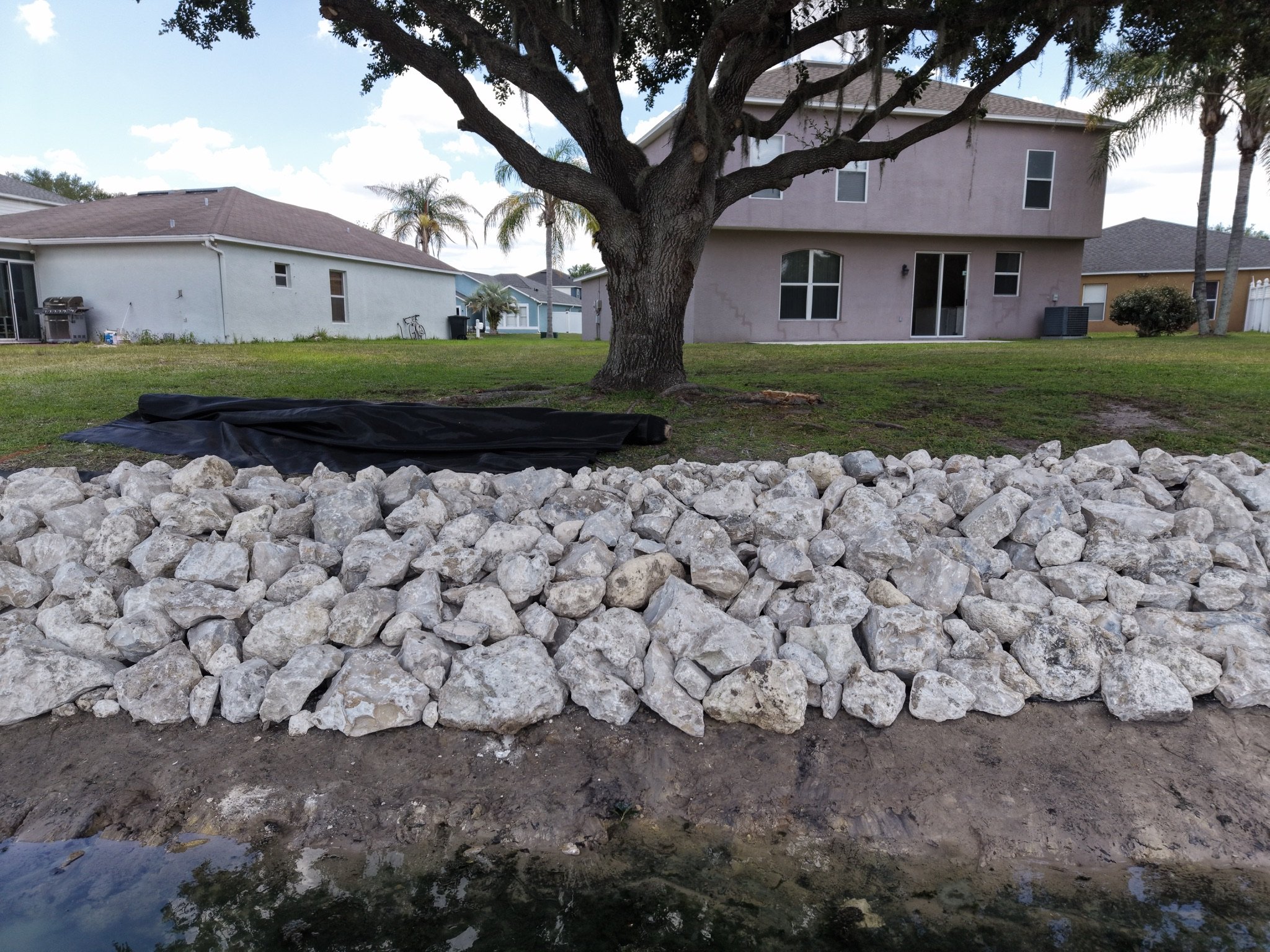
Rip rap is a layer of large, heavy stone used to protect soil from erosion. It is commonly installed along pond banks, shorelines, drainage areas, slopes, culvert outlets, ditches, and other places where water can wash away the ground.
In Florida, rip rap is especially important because heavy rain, stormwater runoff, pond overflow, and soft soil conditions can quickly turn a small washout into a larger property problem. When installed properly, rip rap helps slow down moving water, protect exposed soil, and stabilize areas that are at risk of erosion.
What Does Rip Rap Do?
Rip rap works by creating a protective rock barrier between moving water and the soil underneath. Instead of water hitting bare dirt directly, the force of the water is broken up by the rocks.
This helps reduce erosion, protect slopes, and prevent the ground from washing away over time. Rip rap is not just used for appearance. It is a functional erosion control material that can protect property, drainage systems, ponds, and shorelines.
Common Rip Rap Sizes
Rip rap comes in different sizes depending on the project. The right size depends on the amount of water movement, the slope of the area, the soil conditions, and the purpose of the installation.
Common size ranges include:
Small rip rap: 2” to 4” inches. This can be used for lighter erosion control, smaller drainage areas, and areas where heavy water flow is not expected.
Medium rip rap: 4” to 12” inches. This is common for pond edges, drainage swales, small slopes, and general erosion protection.
Large rip rap: 12+ inches. This is used for stronger stabilization, larger drainage areas, pond banks, shorelines, and places where water movement is more aggressive.
Exact sizing can vary by supplier, quarry, and project requirements. That is why it is important to choose the right material for the conditions instead of using the same stone size for every job.
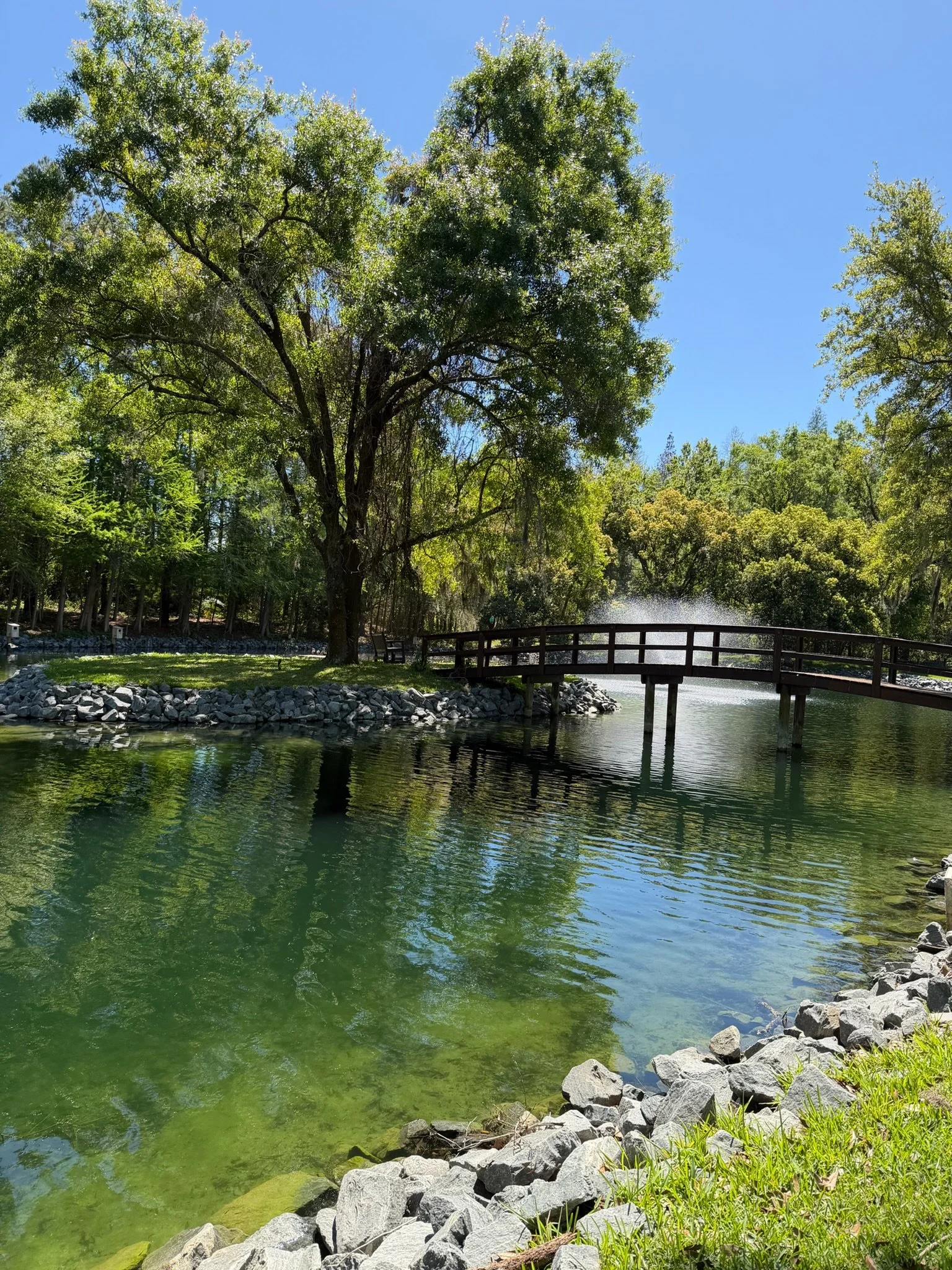
Granite Rip Rap installed around a pond
Types of Rock Used for Rip Rap
Rip rap can be made from several types of stone. The most important factors are strength, durability, weight, and how well the rock holds up to weather and water.
Limestone rip rap is very common in Florida and is often used for pond banks, drainage areas, erosion control, and shoreline protection. It is durable, available in many sizes, and works well for many land and water management projects.
Granite rip rap is another strong option. Granite is very hard and durable, which makes it useful for projects that need long-lasting protection. It is often used where strength and appearance are both important.
Concrete rip rap may be used in some applications, often as broken concrete. This can be a practical option for certain erosion control projects, but it needs to be clean, properly sized, and appropriate for the site.
Their is no “best type” of rip rap. This depends on the site, the budget, the water conditions, and the desired final appearance.
Where Is Rip Rap Used?
Rip rap is used anywhere soil needs protection from water movement. Some of the most common uses include pond banks, retention ponds, drainage ditches, swales, culvert outlets, shorelines, slopes, canals, stormwater areas, and erosion-prone common areas.
For homeowners, rip rap may be used around ponds, lakefront property, drainage outlets, or washed-out slopes.
For HOAs and managed communities, rip rap is often used around retention ponds, shoreline areas, common property, stormwater systems, and places where erosion is affecting the appearance or safety of the community.
For commercial properties, rip rap can help protect drainage infrastructure, stabilize slopes, and prevent future washouts that may become expensive repairs.
Why Rip Rap Is Important
Erosion usually gets worse if it is ignored. What starts as a small washout can become a failing pond bank, a damaged slope, standing water, exposed utilities, or unsafe ground.
Rip rap helps prevent that by giving the area a stronger layer of protection. It can help reduce future maintenance, protect property value, improve drainage performance, and keep the land more stable during heavy rain.
In Florida, water management matters. Retention ponds, swales, and drainage systems are part of how properties handle stormwater. When those areas begin to fail, the issue can spread quickly. Rip rap is one of the most effective ways to protect those areas before the damage becomes larger.
Proper Installation Matters
Rip rap needs to be installed correctly to work the way it should. The area may need to be graded, shaped, compacted, and prepared before the stone is placed. In many cases, a fabric or bedding layer is installed underneath to help separate the stone from the soil and reduce washout below the rock.
The stone also needs to be placed at the right depth and in the right area. If the rock is too small, too thin, or not extended far enough, water can still work around it and continue causing erosion. A good rip rap installation is not just dumping rock on a problem area. It is about understanding how water is moving, where the soil is failing, and what type of material will hold up over time.
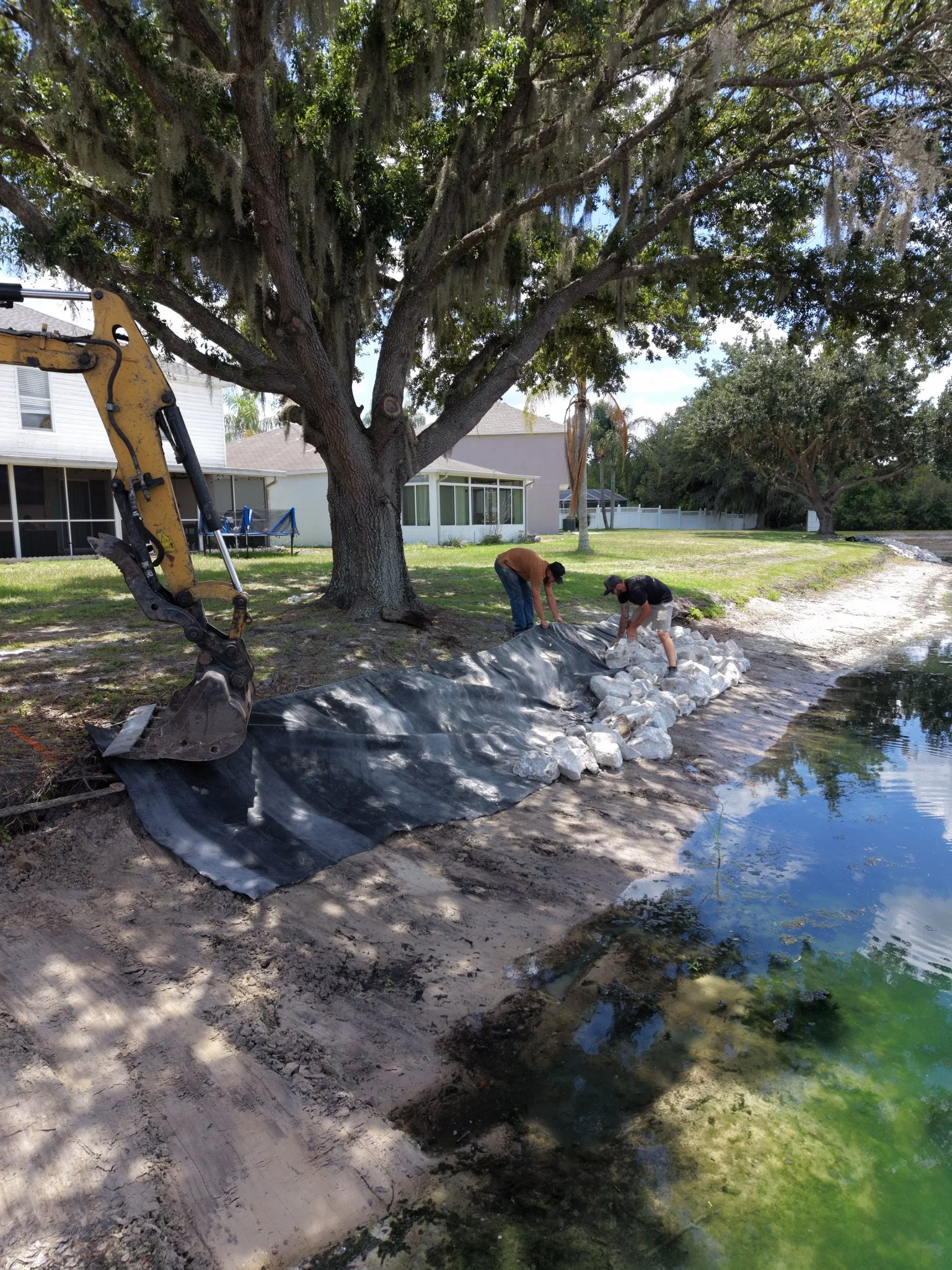
AllJax employees placing Geotextile fabric before laying Rip Rap
Choosing the Right Rip Rap for the Job
The right rip rap depends on the property and the problem being solved. A small drainage washout may not need the same size stone as a pond bank or shoreline. A steep slope may need a different approach than a flat swale. A visible community pond may need both function and a clean finished appearance.
AllJax Land Solutions helps property owners, HOAs, property managers, and contractors choose the right approach for erosion control, pond work, drainage repair, shoreline stabilization, and rip rap installation.