I Bought an Overgrown Property. What Should I Do First?
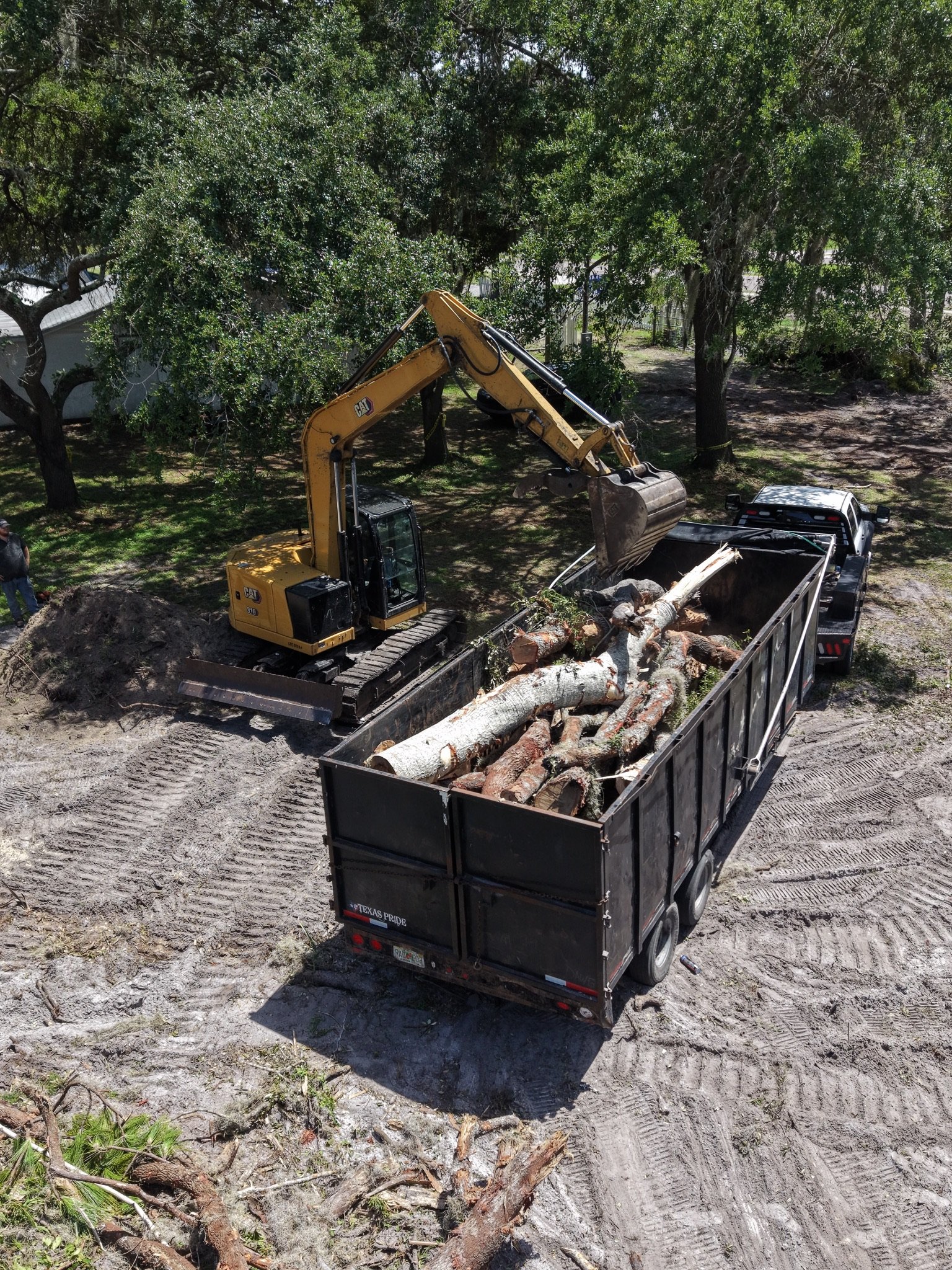
Buying an overgrown property can be exciting, but it can also be difficult to know where to begin. Thick brush, vines, fallen trees, and heavy vegetation may prevent you from seeing the property’s boundaries, drainage patterns, or usable areas.
Before clearing the entire lot, it is usually better to open the property gradually, evaluate the site, and build a plan around how the land will be used.
Start by Confirming the Property Boundaries
Before equipment begins removing vegetation, make sure the property lines are clearly identified.
A recent survey can help locate:
Property boundaries
Easements and access points
Rights-of-way
Existing structures
Drainage areas
Wetlands or other restricted areas shown on the survey
Do not rely only on old fencing, trails, or where the neighboring property appears to begin. Clearly marking the boundaries helps prevent accidental clearing outside the property.
Create Access Through the Property
If the property is too overgrown to walk, the first step may be selective underbrush removal rather than full land clearing.
This can include removing:
Palmettos and thick brush
Vines and low vegetation
Fallen limbs and small debris
Growth surrounding larger trees
Vegetation blocking trails or access routes
Opening the property makes it easier to walk the land, identify desirable trees, inspect low areas, and determine where future improvements should go.
This approach can also prevent unnecessary tree removal before a complete site plan has been developed.
Decide How the Property Will Be Used
The clearing plan should reflect the property’s intended purpose.
Consider whether the land will eventually include:
A home or building pad
A driveway or access road
A barn, workshop, or storage area
Pasture or usable yard space
A pond or drainage area
Utility routes
Areas that will remain wooded
Knowing where these features may be placed helps determine which trees and vegetation should stay and which areas require more complete clearing.
Evaluate Drainage and Low Areas
Heavy vegetation can hide standing water, erosion, old drainage ditches, or areas where runoff collects.
Before grading or placing fill, evaluate:
Where water enters the property
Where water naturally flows
Low or saturated areas
Existing swales and ditches
Roadside drainage
Nearby ponds, wetlands, or retention areas
Potential driveway crossings or culvert locations
Clearing and grading without understanding the drainage can redirect water toward buildings, neighboring properties, or access roads.
Check for Wetlands and Permit Requirements
Not every part of an overgrown property can automatically be cleared or filled.
Properties in Florida may contain wetlands, flood-prone areas, protected vegetation, easements, or other conditions that affect what work can be completed. Depending on the property and the scope of work, permits or environmental reviews may be required.
These questions should be addressed before full clearing, filling, excavation, or major drainage changes begin.
Choose the Right Type of Clearing
Different clearing methods produce different results.
Underbrushing removes low vegetation and creates access while leaving larger trees in place.
Forestry mulching processes brush and smaller vegetation into mulch but may leave stumps, roots, and uneven ground.
Full land clearing and grubbing removes trees, stumps, roots, and vegetation when the area must be prepared for construction or another finished use.
The correct method depends on whether the immediate goal is to inspect the property, improve access, create usable space, or begin full site preparation.
Plan the Next Phase
Once the property is accessible and properly evaluated, the larger project can be planned more accurately.
The next phase may include:
Tree and stump removal
Root raking and debris removal
Rough or finish grading
Drainage improvements
Driveway construction
Fill placement and compaction
Building-pad preparation
Pond or ditch work
Taking the project in stages can provide a clearer understanding of the land before larger decisions are made.
Overgrown Property Clearing in West Central Florida
AllJax Land Solutions provides underbrush removal, forestry mulching, land clearing, grading, drainage, driveway construction, excavation, and site preparation throughout West Central Florida.
We can help open an overgrown property so it can be safely walked, evaluated, and planned before full clearing or construction begins.
Contact AllJax Land Solutions to discuss your property and determine the best first step.