Does My Pond Need Dredging, Bank Repair, or Both?
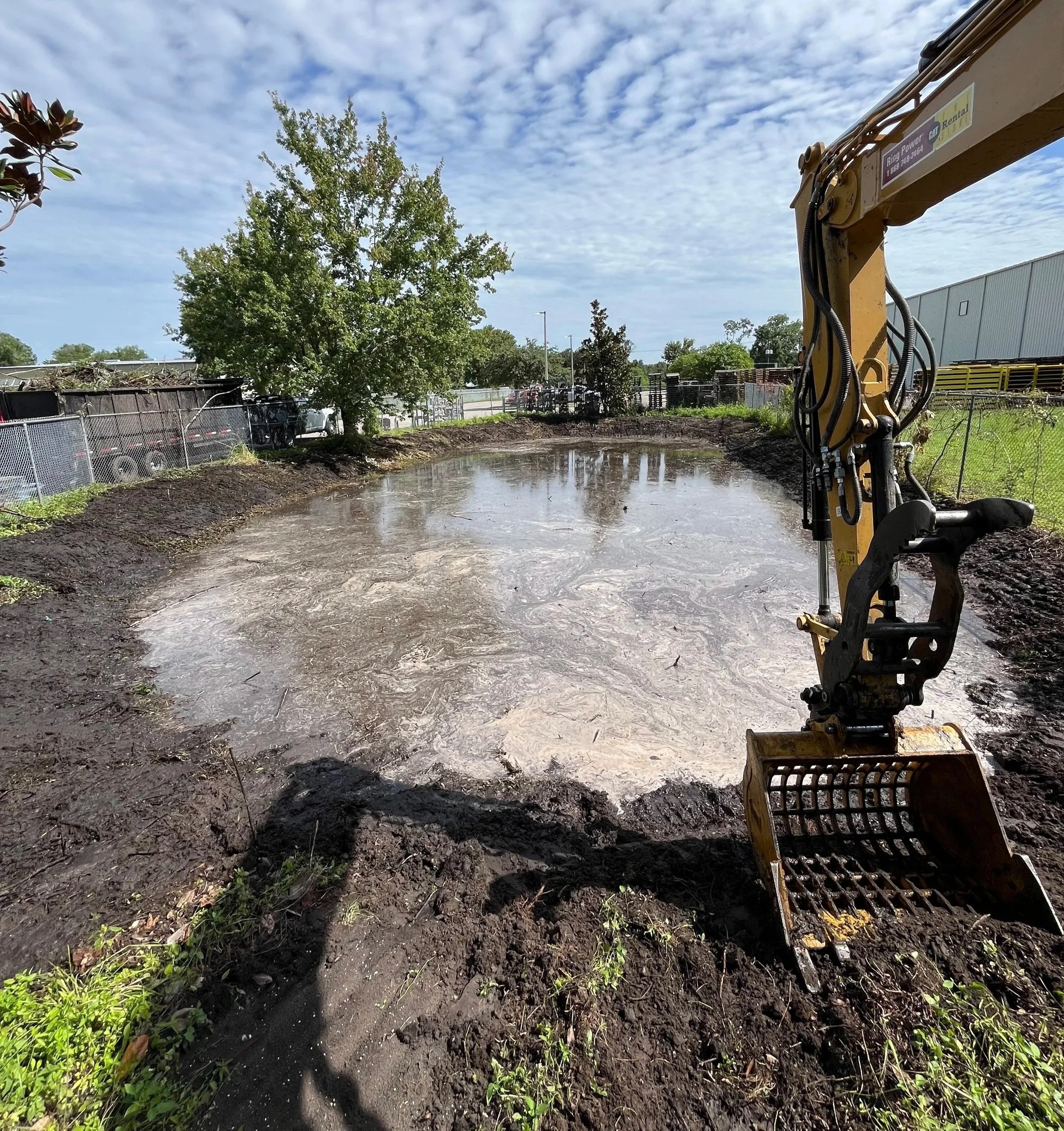
When a pond becomes shallow, overgrown, or unstable around the shoreline, the problem may be sediment buildup, bank erosion, or a combination of both. Understanding the difference helps property owners, HOAs, farms, and commercial property managers choose the right repair.
When Does a Pond Need Dredging?
Pond dredging removes accumulated muck, sediment, vegetation, and debris from the bottom of a pond or retention area.
Dredging may be needed when:
The pond has become noticeably shallower
Muck or sediment is visible near the shoreline
Vegetation is spreading through shallow areas
Drainage inlets or outlets are becoming blocked
The pond is holding less water than it previously did
Stormwater runoff has deposited soil into the pond
Dredging addresses material that has built up inside the pond, but it does not automatically repair an eroding shoreline.
When Does a Pond Need Bank Repair?
Bank repair restores and stabilizes the shoreline or embankment surrounding the pond.
Water movement, runoff, unstable soil, steep slopes, and changing water levels can gradually cause the bank to wash away. That soil often ends up in the pond, creating additional sediment buildup.
Bank repair may be needed when:
Sections of the shoreline are collapsing
The pond edge is moving farther into the property
Erosion channels are forming along the slope
Exposed roots are visible
The bank feels soft, steep, or unstable
Nearby roads, fences, or maintained areas are being threatened
Repairs may include reshaping the bank, placing and compacting fill, improving drainage, installing erosion-control materials, or stabilizing the shoreline with riprap.
Signs Your Pond May Need Both
Many pond problems are connected. An eroding bank can deposit large amounts of soil into the water, while accumulated sediment can reduce pond depth and drainage capacity.
Your pond may need both dredging and bank repair when:
The shoreline is eroding and the pond is becoming shallow
Soil from the bank has collected along the pond bottom
Vegetation is growing in newly formed sediment deposits
Runoff channels are carrying material directly into the pond
Parts of the bank have collapsed into the water
Completing only one repair may leave the underlying problem unresolved. Dredging without stabilizing the bank may allow the pond to fill again, while repairing the bank alone will not remove sediment already inside the pond.
Can Riprap Stabilize a Pond Bank?
Riprap is commonly used where moving water or concentrated runoff repeatedly erodes a shoreline. Properly placed stone helps protect the soil beneath it and reduce future erosion.
However, riprap should be installed over a properly prepared and shaped bank. Simply placing stone into a washed-out area may not create a lasting repair. Drainage, slope, base preparation, stone size, and placement all matter.
Some sites may also require grading, compacted fill, erosion-control fabric, vegetation, or drainage improvements.
What Should Be Evaluated?
Before work begins, the pond and surrounding property should be reviewed for:
Sediment depth
Shoreline stability
Drainage inlets and outlets
Areas where runoff enters the pond
Equipment access
Nearby utilities, roads, fences, or structures
Placement or removal of excavated material
Possible erosion-control needs
Identifying the source of the problem is important. Adding soil to a failing bank or removing muck without correcting drainage may provide only a temporary improvement.
Pond Dredging and Bank Repair in West Central Florida
AllJax Land Solutions provides pond dredging, muck and sediment removal, shoreline repair, embankment stabilization, riprap installation, grading, drainage, and erosion-control services throughout West Central Florida.
A site evaluation can help determine whether your pond needs dredging, bank repair, or a combination of both.