
Start with the site, not the equipment · Lakeland
Pond Dredging in Lakeland, FL
A pond that looks shallow or overgrown does not automatically need the same repair everywhere. Sediment, muck, vegetation, bank failure and blocked inflow or outflow can create similar symptoms but require different work. In Lakeland, AllJax approaches that work for HOAs, communities, commercial property managers, contractors, institutions and owners of larger private ponds without treating every property like the same machine job.
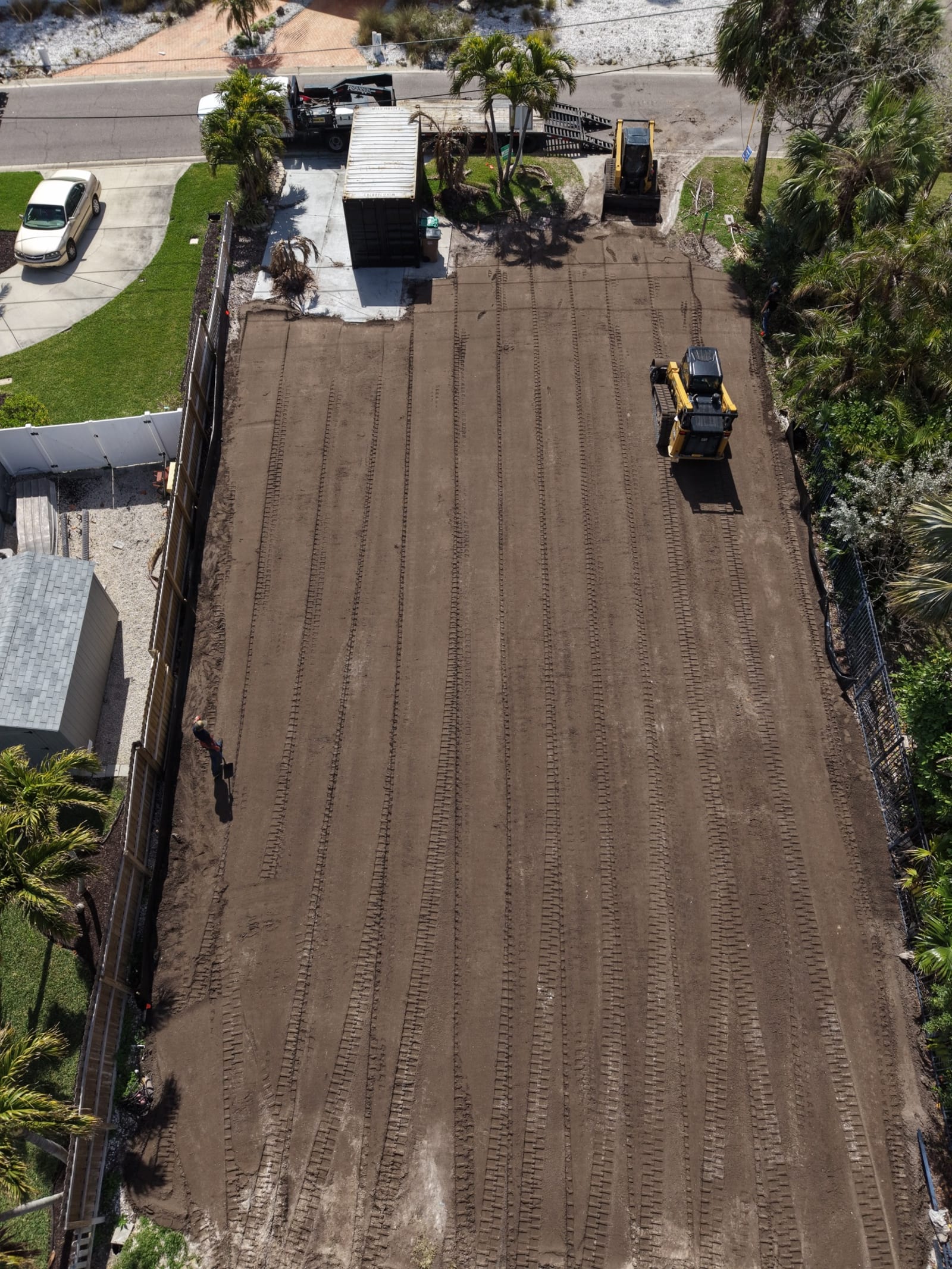
Project fit: commercial and industrial sites, builders and developers, larger residential property and lake and drainage-adjacent sites. Residential work remains welcome; scope, access, complexity and the finished result determine the project.
Where this service earns its keep
Match the work to the actual problem.
The same service name can describe very different projects. The goal is to define what the site needs to do when AllJax is finished—not simply which machine shows up first.
Sediment & lost depth
Remove accumulated material where the pond has filled in and usable depth or storage has been reduced.
Muck & organic buildup
Excavate soft accumulated material that cannot simply be graded or compacted back into a useful pond bottom.
Vegetation & access
Clear banks or access routes where overgrowth prevents equipment from reaching the pond or hides the actual condition.
Bank & drainage issues
Evaluate erosion, outfalls, ditches and embankments when the pond problem extends beyond material on the bottom.
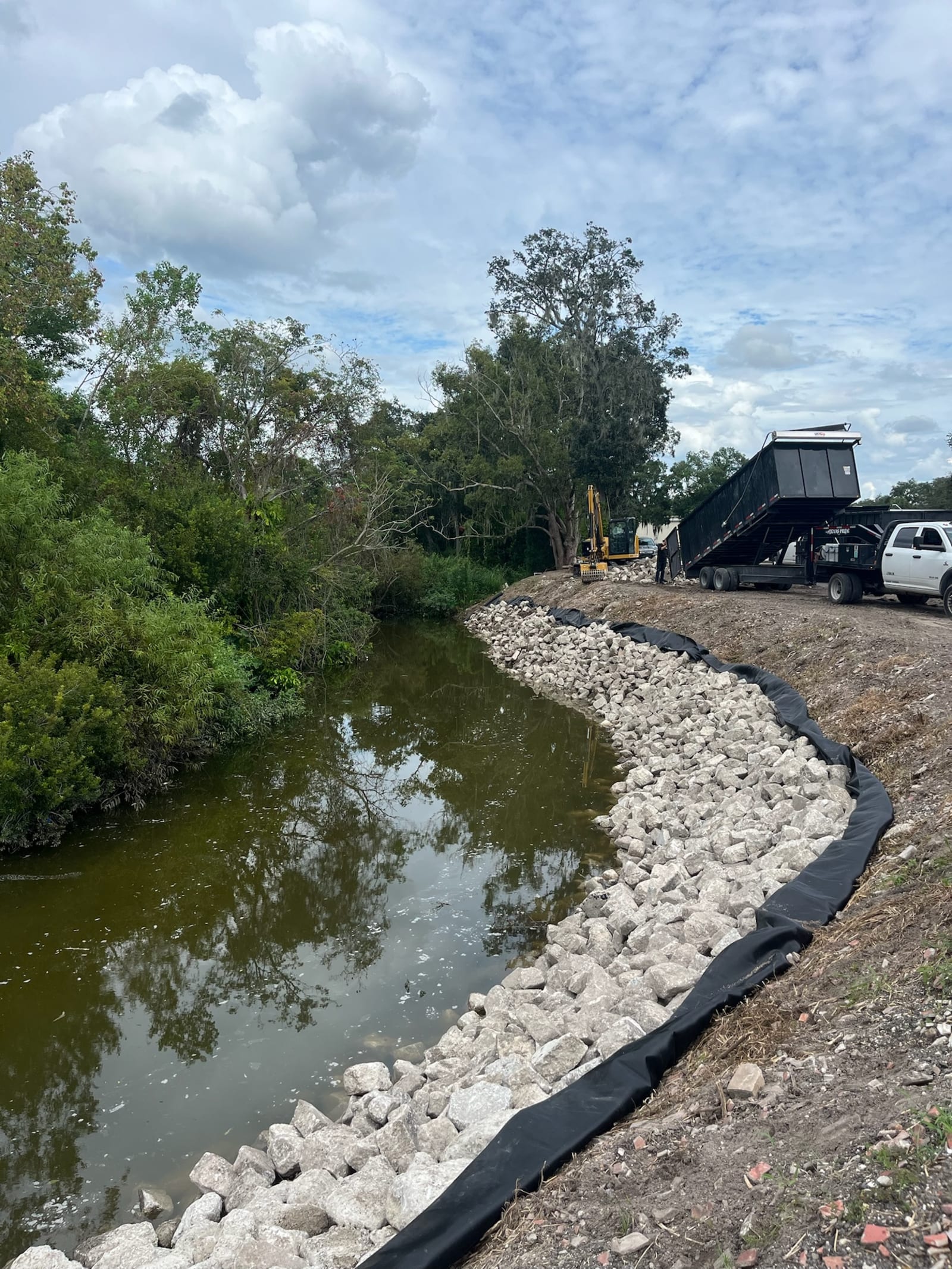
A decision that changes the scope
Dredging the bottom and repairing the pond system are not always the same job.
Dredging & demucking
Targets accumulated sediment, soft material and debris that have reduced depth or changed the pond bottom.
Bank, inlet & outlet work
Targets erosion, blocked flow, failing slopes or access around the pond. Those problems may need grading, ditch work, rip rap or stabilization in addition to dredging.
Polk County
Planning pond dredging around Lakeland
Lakeland combines a lake-rich setting with commercial, industrial, residential and development sites. Larger earthwork should be planned around the site's existing drainage system, access, soil conditions and finished use.
Polk County's drainage program addresses flooding, drainage infrastructure and long-term maintenance. On larger properties, ditch, pond, grading and site work should be planned around the drainage system already serving the area.
For pond dredging, that means the work area, access, existing drainage, limits of disturbance and the finished use should be clear before the scope is finalized.
Planning reference: Polk County Growth & Infrastructure — Drainage. Project-specific permit and engineering requirements should always be confirmed from the current plans and local authority.
Scope it correctly
Before equipment is scheduled
Sediment, muck, vegetation, trash or mixed material that must be removed.
How equipment reaches the water and where excavated material can be handled.
Whether material can be managed on site or needs loading, hauling and disposal.
Inlets, outlets, banks and drainage connections that may be contributing to the problem.
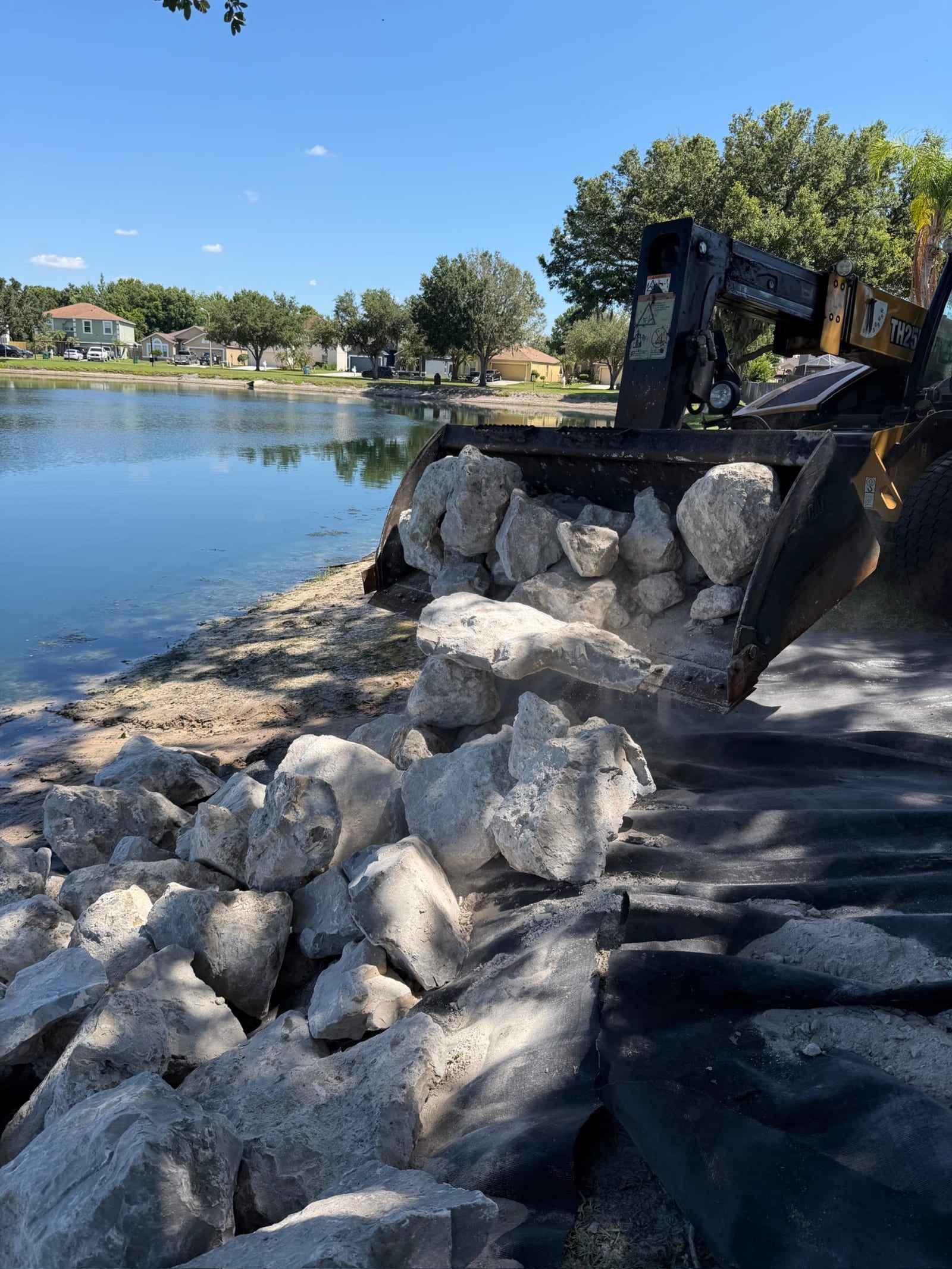
Useful answers before the quote
Questions that affect the plan
How do I know if a pond needs dredging?
What happens to the material removed from a pond?
Can AllJax repair pond banks at the same time?
Lakeland project review
Send the project, not just a service name.
Send the pond location, several wide photos, approximate pond size, what has changed over time and any known inlet or outlet locations. If an HOA or commercial site has plans or maintenance records, those can help define the project.