Measure Twice, Build Once: Why Property Surveys Matter
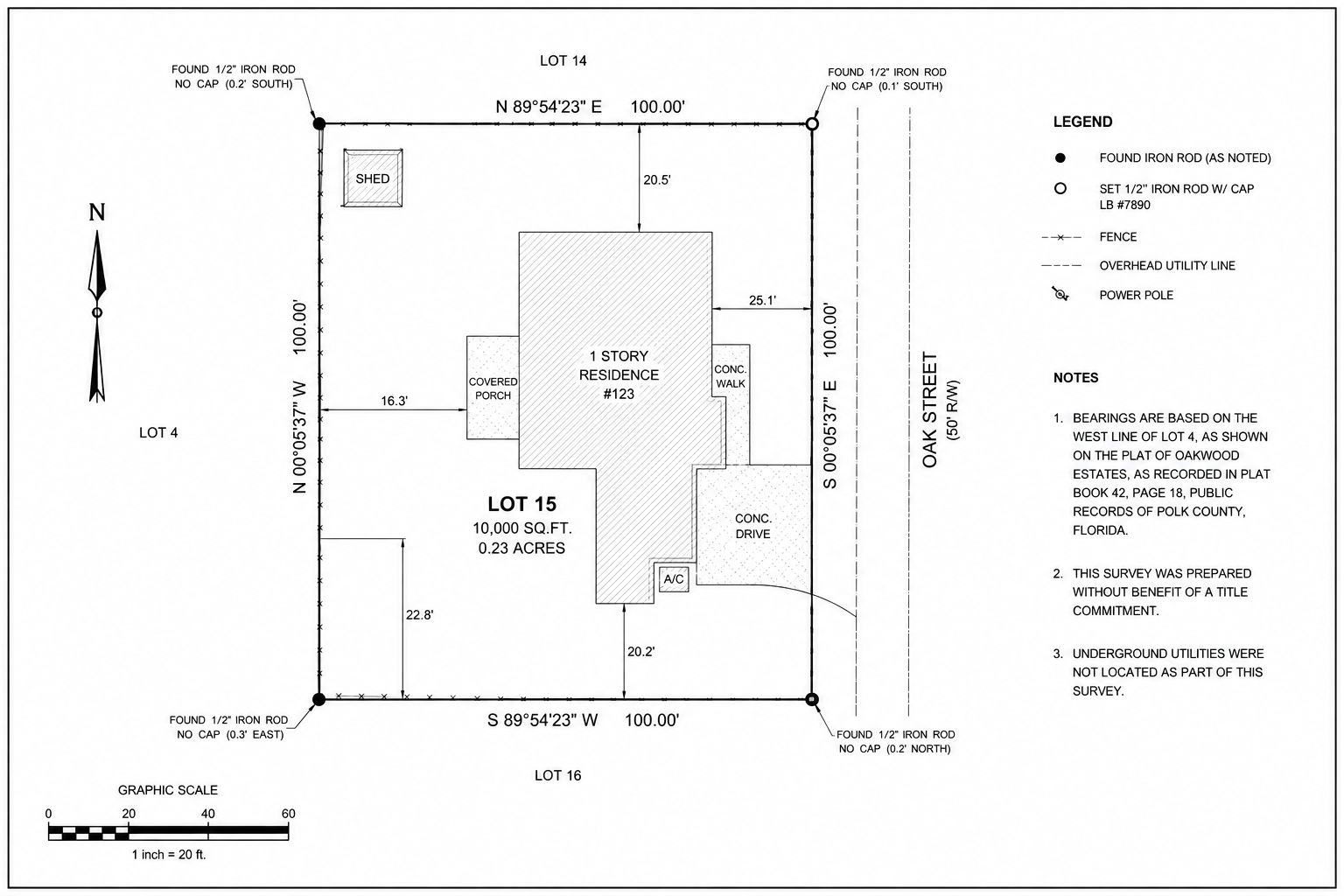
Before clearing land, building a wall, installing a fence, grading a lot, or starting site work, there is one basic question that needs a reliable answer: Where does the property actually begin and end?
Property lines are not always where they appear to be. A fence, tree line, driveway, old wall, or where a neighbor has historically maintained the property does not necessarily establish the legal boundary. That is why a current property survey can be one of the most important documents to have before work begins.
A survey can feel like an extra step before a project starts. Removing or rebuilding something because it was constructed in the wrong place is a much bigger step.
A Real Example: A Wall Built Over the Property Line
The problem was not the wall. It was where the wall was built.
AllJax recently worked on a property where a neighboring property had constructed a wall that extended beyond the property line. Once the actual boundary was established, the issue became clear: part of the structure was on property where it did not belong.
We were brought in to demolish and remove the portion that crossed the property boundary.
It is a simple example of why property boundaries should be verified before construction begins. The wall had already been built. Labor and materials had already been spent. Then additional work was required to remove it.
A boundary issue discovered before construction can often be addressed with a change in layout. The same issue discovered after construction may involve demolition, reconstruction, additional costs, delays, or a dispute between property owners.
What Does a Property Survey Tell You?
A professional land survey can establish or document important information about a property, including its boundaries and the relationship between those boundaries and existing or proposed improvements.
Property Boundaries
Identifies the location of the property's legal boundary lines rather than relying on visual assumptions.
Existing Improvements
Can show how structures and other improvements are positioned in relation to the property boundaries.
Proposed Improvements
Survey information can be used when laying out proposed construction so work starts in the correct location.
Boundary Conflicts
A survey may reveal that an existing fence, wall, driveway, structure, or other improvement does not align with the actual property boundary.
When Should You Get a Survey Before Construction?
If a project is being performed close to a property line, guessing is rarely worth the risk. A property owner should consider having the boundaries professionally verified before work such as:
- Building or replacing a fence or wall
- Clearing trees or vegetation near a property boundary
- Constructing a driveway or access road
- Building a shed, garage, addition, or other structure
- Performing excavation or grading near neighboring property
- Installing drainage improvements near a property line
- Beginning site work on an undeveloped or heavily overgrown lot
This becomes especially important on older properties, heavily wooded lots, acreage, and properties where existing fences or other features may have been treated as the boundary for years without anyone confirming their actual location.
Can You Use a Fence as the Property Line?
You should not assume an existing fence, wall, landscaping edge, or mowing line is the legal property line. These features may have been installed years ago based on convenience, an old understanding between neighbors, or an incorrect assumption.
If the exact boundary matters to the work being performed, it should be established by a qualified professional surveyor rather than estimated from what is visible on the property.
Why This Matters for Land Clearing and Site Work
Property lines matter just as much when removing something as they do when building something.
During land clearing, excavation, grading, demolition, drainage work, or tree removal, crews need to know where the authorized work area ends. Clearing several feet too far, removing the wrong vegetation, changing grades across a boundary, or demolishing an improvement that is not actually within the project area can create a much larger problem than taking the time to verify the limits beforehand.
On paper, a small boundary discrepancy may not look significant. On an active construction site, those few feet can determine whether the work is being performed on your property or someone else's.
Property Survey Questions
Do I need a survey before clearing my property?
Not every land clearing project requires a new survey, but the property boundaries should be clearly established when work will take place near neighboring property. If there is uncertainty about the boundary, having it professionally surveyed before clearing can prevent costly mistakes.
Should I get a survey before building a fence or wall?
If the fence or wall will be placed on or near a property boundary, confirming the boundary before construction is a smart step. Moving a layout before construction is much easier than removing a completed structure later.
What happens if something is built over a property line?
The answer depends on the specific property and circumstances, but a structure that crosses a boundary can create disputes and may ultimately require modification or removal. Property owners facing a boundary dispute should consult the appropriate survey and legal professionals for their situation.
Can a contractor determine my legal property line?
Construction crews can work from established survey controls and marked boundaries, but determining or reestablishing a legal property boundary is professional surveying work. When the boundary itself is uncertain, a licensed surveyor is the appropriate professional to establish it.
Is a property appraiser map the same as a survey?
No. Property maps and online parcel viewers can be useful for general reference, but they should not be treated as a substitute for a professional boundary survey when the precise location of a property line matters.
Before the Equipment Shows Up, Know the Boundaries
Good site work starts before the first bucket of dirt is moved. Plans, access, utilities, drainage, permits, and property boundaries can all affect how a job should be approached.
The wall we recently removed is a good reminder of a simple construction principle: measure twice, build once. When a project is close to a property line, confirming that line before construction can save time, money, demolition, and unnecessary problems later.
AllJax provides land clearing, demolition, excavation, grading, drainage, and site work throughout West Central Florida. When accurate property boundaries are required for a project, those boundaries should be established by a qualified professional surveyor before work proceeds.