Horse Arena Footing Explained
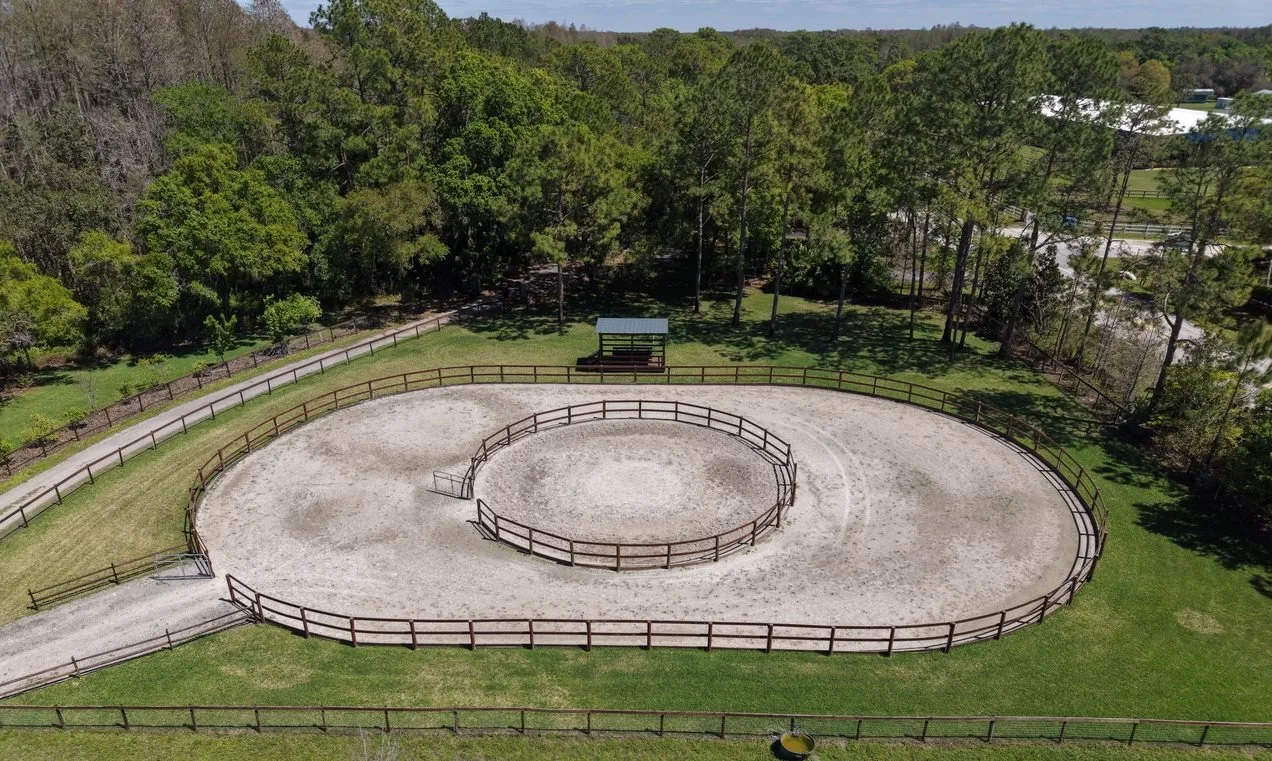
A horse arena may appear simple on the surface, but several layers work together to create a safe and consistent riding environment. Whether used for dressage, jumping, barrel racing, or recreational riding, arena performance depends on proper grading, drainage, base construction, and footing selection.
The Foundation Comes First
Many arena problems begin below the footing layer. Before sand or additives are installed, the site must be graded and compacted to create a stable foundation.
A properly constructed base helps:
Maintain a consistent riding surface
Reduce shifting and rutting
Improve drainage
Extend the life of the footing material
Without a stable foundation, even high-quality footing materials can develop uneven areas and require frequent maintenance.
Why Drainage Matters
Water is one of the biggest challenges for outdoor horse arenas.
Most outdoor arenas are built with a slight slope, typically between 1% and 2%, allowing rainfall to move off the surface. While this grade is often difficult to notice visually, it plays a major role in preventing standing water and soft spots.
To put rainfall into perspective, a standard 100-foot by 200-foot arena can collect thousands of gallons of water during a single storm event. Proper drainage helps ensure that water leaves the arena evenly and efficiently.
Understanding Arena Footing
Footing refers to the riding surface that horses travel on. The goal is to provide traction, stability, and cushioning while maintaining consistency across the arena.
The most common footing material is sand, although different sand types can perform very differently.
Angular Sand
Angular sand contains sharp-edged particles that lock together and provide excellent traction. Because the particles interlock, the footing tends to remain more stable under repeated use.
Sub-Angular Sand
Sub-angular sand is often considered the preferred option for many arenas because it provides a balance between stability and cushioning. The particles interlock while still allowing some movement within the surface.
Round Sand
Round sand particles move more freely and generally provide greater cushion. However, the footing may feel looser and offer less traction than angular alternatives.
Common Footing Additives
Many arena owners incorporate additives to improve performance and reduce maintenance requirements.
Sand and Fiber
Fiber products are commonly blended with sand to help hold the footing together and improve consistency throughout the riding surface.
Sand and Rubber
Rubber additives are often used to increase cushioning and shock absorption. They can help reduce impact forces while improving comfort for both horse and rider.
Footing Depth
Footing depth is another important consideration. Most horse arenas maintain footing depths between 2 and 4 inches, although the ideal depth depends on the riding discipline, footing material, and rider preferences.
Too little footing may create a hard riding surface, while excessive depth can increase effort for both horses and riders.
Every Arena Is a System
A horse arena is more than a layer of sand. Grading, drainage, compaction, base construction, footing material, and maintenance all work together to influence performance.
Understanding how each component contributes to the finished surface can help arena owners make informed decisions when building, renovating, or maintaining a riding arena.